Featured
Table of Contents
The counselor will review your financial resources with you to establish if the program is the right option. The evaluation will certainly include a check out your monthly earnings and expenditures. The company will certainly pull a credit record to recognize what you owe and the extent of your hardship. If the mercy program is the very best remedy, the therapist will send you a contract that details the strategy, including the quantity of the regular monthly payment.
If you miss out on a repayment, the arrangement is nullified, and you must leave the program. If you believe it's an excellent option for you, call a therapist at a not-for-profit credit history therapy company like InCharge Financial debt Solutions, that can address your concerns and help you figure out if you certify.
Due to the fact that the program permits consumers to go for less than what they owe, the lenders that get involved want reassurance that those who make the most of it would not be able to pay the total. Your bank card accounts likewise must be from banks and credit rating card firms that have actually agreed to get involved.
Balance must go to the very least $1,000.Agreed-the equilibrium needs to be repaid in 36 months. There are no extensions. If you miss out on a repayment that's simply one missed settlement the arrangement is ended. Your lender(s) will cancel the strategy and your equilibrium returns to the original quantity, minus what you've paid while in the program.
Excitement About What to Watch For While Selecting Debt Relief Help
With the mercy program, the financial institution can rather pick to maintain your financial debt on guides and recoup 50%-60% of what they are owed. Nonprofit Charge Card Financial debt Mercy and for-profit debt settlement are comparable in that they both provide a means to clear up credit scores card financial debt by paying less than what is owed.

Charge card mercy is made to set you back the consumer less, settle the financial obligation quicker, and have fewer drawbacks than its for-profit counterpart. Some key locations of difference in between Charge card Debt Mercy and for-profit debt negotiation are: Credit Card Financial debt Mercy programs have partnerships with lenders that have actually consented to take part.
Once they do, the payback period begins immediately. For-profit financial obligation settlement programs discuss with each lender, typically over a 2-3-year duration, while passion, charges and calls from debt collection agencies proceed. This suggests a larger hit on your credit scores record and credit report, and a boosting equilibrium up until settlement is finished.
Credit History Card Financial obligation Forgiveness clients make 36 equal regular monthly repayments to remove their financial debt. For-profit financial obligation negotiation customers pay right into an escrow account over a settlement period towards a lump sum that will certainly be paid to creditors.
The smart Trick of What's Next in Dealing with Property Tax Escrow Shortages: When to Call a Housing Counselor Solutions That Nobody is Discussing
Phone calls from financial obligation collection agencies continue and creditor-reported non-payments proceed to damage the client's credit history report. Registration in a Debt Card Financial debt Mercy stops phone calls and letters from financial debt collection and recuperation firms for the accounts consisted of in the program.
For-profit financial obligation negotiation programs don't stop collection activities till the lump-sum repayment is made to the financial institution. Nonprofit Debt Card Financial debt Mercy programs will certainly tell you up front what the monthly charge is, capped at $75, or less, depending upon what state you reside in. For-profit financial obligation negotiation companies may not be clear about charge amounts, which frequently are a percent of the balance.
A Biased View of Categories of Debt Forgiveness Offered Now
For-profit financial obligation negotiation likely will harm it much more, given that you will not be paying financial institutions during the 2-3 year negotiation/escrow period, but they haven't concurred to a strategy or gotten any kind of cash, so they're still reporting nonpayment. This is on top of the credit report hit from not paying the sum total.
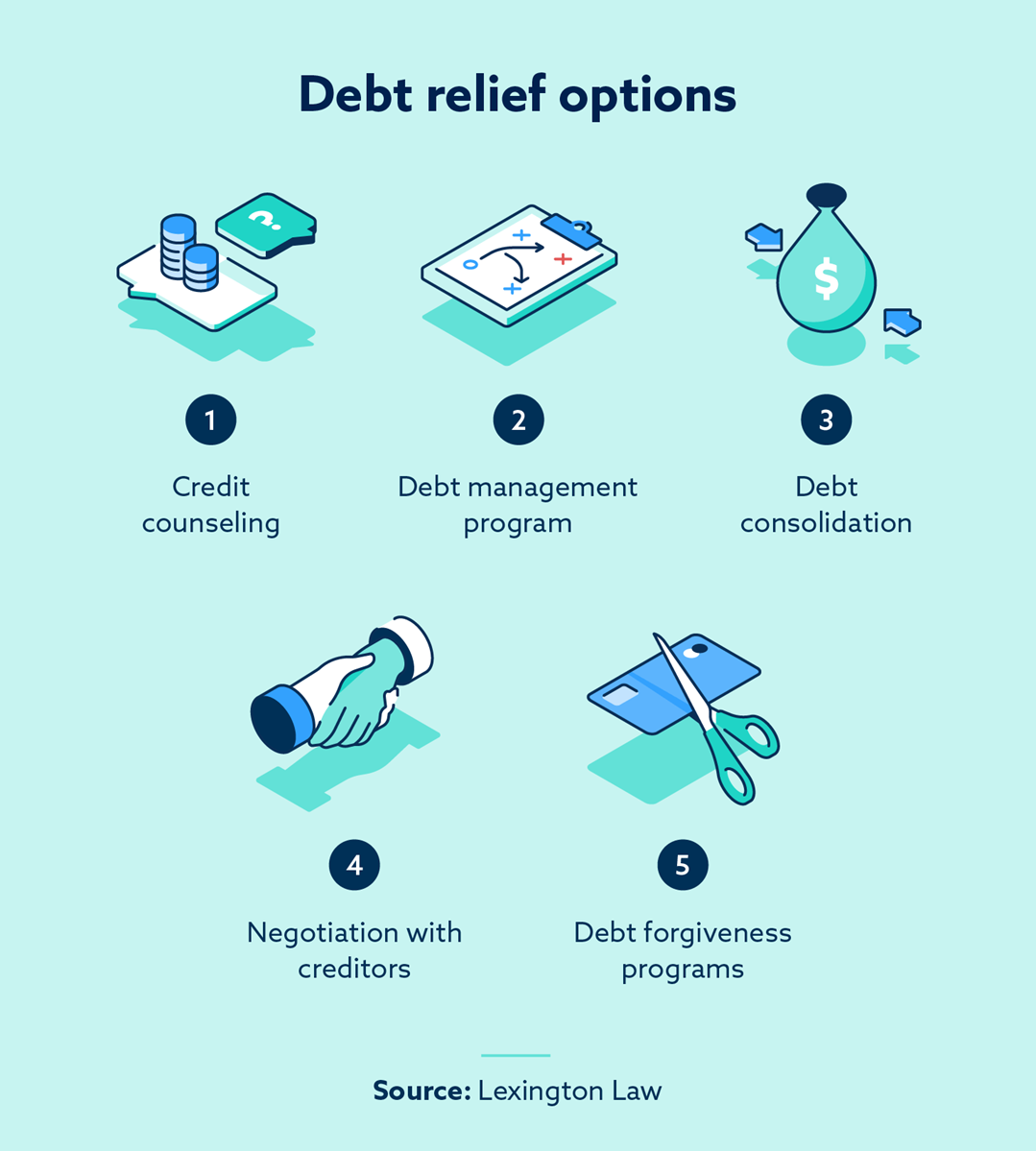
Financial obligation combination additionally comes with a lower interest price than what you were paying on your credit scores cards, making the month-to-month expenses, as well as general expenses, less. Charge card financial obligation combination's most usual forms are financial debt monitoring strategies, financial obligation loan consolidation lendings, or a zero-interest transfer charge card.
To get a financial debt combination finance or a zero-interest balance transfer charge card, you need a credit rating of a minimum of 680. Greater. If your accounts are charged off, your credit history is likely well below that. Credit history isn't a variable for financial obligation management program, but you need an enough revenue to be able to make a regular monthly settlement that will cover all of the accounts consisted of in the program.
Bankruptcy is the last hotel for a person who has even more debt than they can pay. It can be the action you take in order to stay clear of personal bankruptcy.
The Best Strategy To Use For Steps for Get Started Now
Personal bankruptcy will get rid of all eligible unsafe financial obligation. Credit Report Card Debt Forgiveness will certainly have an unfavorable effect on your credit scores rating because complete equilibriums on accounts were not paid.
Credit Scores Card Debt Mercy payments start as soon as you're accepted right into the program. Collection activities and suits on Debt Card Debt Forgiveness customers are quit once financial institutions agree to the plan.

Table of Contents
Latest Posts
All About Documents You'll Need When Pursuing When Bankruptcy Counseling Suggests Debt Management or Forgiveness Instead
8 Simple Techniques For What to Watch For When Researching a Mortgage Help for Low-Income Families: What Options Do You Really Have? : APFSC Provider
Market Trends for Debt Forgiveness and Consumer Protections Can Be Fun For Anyone
More
Latest Posts
All About Documents You'll Need When Pursuing When Bankruptcy Counseling Suggests Debt Management or Forgiveness Instead
Market Trends for Debt Forgiveness and Consumer Protections Can Be Fun For Anyone